Current Projects
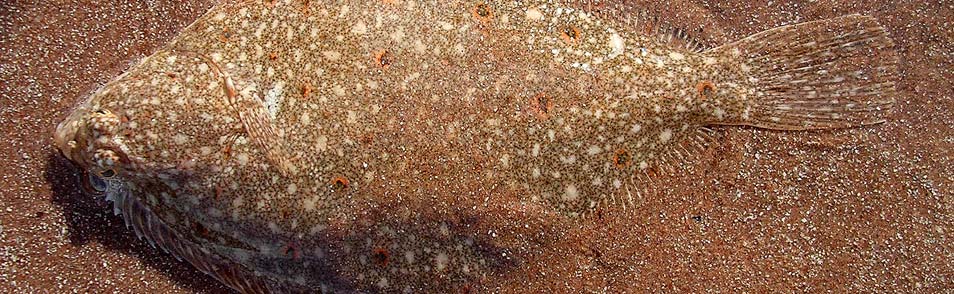
Underwater Surveys for Marine Priority Features
This work is being carried out through SSSi and further information can be found here
Ash Dieback survey of Skye & Lochalsh
A community participation survey of a disease that is killing our ash trees, in the hope of finding disease-resistant trees to help save the ash. See below an article below dated December 2025 where the survey is now closed.
Saltmarsh Survey
In 2019, SLEF members contributed to a UK wide project ‘Carbon Storage in Intertidal Environments’ (C-SIDE). Soil sampling from 13 local saltmarshes was undertaken in conjunction with Bangor University in North Wales and St Andrews University, Scotland. The aim of the survey was to measure the organic content of various saltmarshes, to evaluate their importance for carbon capture.

Results of the survey have not yet been recieved, but will be posted on the website when they are available.
Ash Dieback-an update
Ash Dieback Disease by James Merryweather
SLEF members might remember that back in 2021 we launched a project in which we requested reports of Ash Dieback in the region. We received few, so the project fizzled out.
That didn’t prevent Roger Cottis and me maintaining observations which disappointed us massively while we were occasionally surprised and encouraged (if only a little) with what seemed to be healthy trees.
Thanks to the ascomycete fungus Hymenoscyphus fraxineus we now see dead and dying ashes all over the place. This sorry sight is all through Skye & Lochalsh. I’m particularly aware of it in and around my village, Auchtertyre, even on the remote hillside, where three mighty ash trees, a major landscape feature which survived the April 2013 fire, are now dead or almost so.
Having mentioned the fire and those ashes, the day after the fire I went up to see what had happened to the numerous saplings I had found growing around them beneath the bracken cover. With the brown bracken cover burnt away they had become very noticeable, thousands of them and far more than I had suspected, but they were all – all of them – not burnt but cooked to a crisp. They would soon be replaced from new seed, except next along came ash dieback eliminating the seed source. Tragic.
Before dieback, a fascinating ash community beside the A851 Armadale road by Loch na Dal had caught our attention. Hundreds of young ashes had grown into a dense grove which, but when we went in, what we discovered were the offspring of a great fallen ‘mother’ tree. Adjacent shady woodland was carpeted with optimistic little saplings, patiently waiting for an uncertain adult future. Then Ash Dieback arrived and pretty well wiped out the lot. We must visit again in 2026 to see if any have survived.
The view of Brahan Wood by the A835 as we approach Dingwall taking the Achnasheen route to Inverness (around NH514556) looks very sad, a host of healthy mixed species trees peppered with the pale grey stag-horns of dead ashes; and that scene is everywhere.
Some of us remember, with sadness, a lost English landscape characterised by Elm trees which were attacked and wiped out by beetles followed by the fatal fungus Ophiostoma novo-ulmi. At the time, it was thought wise to chop down the trees, but it looks like we eliminated any resistant individuals which might have repopulated Britain.
While back in 2021 the prospect for ash trees in Britain was similarly looking very bleak. However, we keep noticing trees that seem to have remained healthy. If we look carefully, we can see that they are not even in the early disease stage of dying from the branch tips. They are fully alive. We see these live trees, in stark contrast with infected trees, when they are green through spring and summer, but they become really obvious when the leaves turn yellow at the start of autumn. They have leaves all over and look wonderful!
A noticeably unaffected tree is the tall one by the roadside cottage at New Kelso (near Strathcarron, NG9368642641). Only a few yards away, the lane opposite is lined with dead young ashes, so is the big tree a resistant individual? Can it be that there is a reservoir of resistance in the ash population of Britain? Yes.
We are now seeing encouraging news that the previously predicted elm-like extinction of ash might not be so severe. Research is revealing that some trees produce chemicals that render them resistant to the fungus while resistant young trees are already entering the landscape thanks to natural selection of the fittest, so we have some hope that, eventually, ash will repopulate Britain.
British ash woodland is evolving resistance to ash dieback June 30, 2025. New research indicates that natural selection is working to combat ash dieback, a fungal disease that has devastated ash trees across Europe. Scientists at the Royal Botanic Gardens, Kew and Queen Mary University of London have discovered that a new generation of ash trees, growing naturally in woodland, is showing greater resistance to the disease than the older trees.
https://www.science.org/doi/10.1126/science.adp2990
SLEF on YouTube
In case people have yet to become aware, SLEF has its own YouTube channel:
https://www.youtube.com/@skyelochalshenvironmentf-pg5cn/videos
Maybe start with Roger Cottis’s Year of the Roe Deer on the Isle of Skye and be ready for more. He has stacks of excellent footage of otters, badgers, weasels, pine martens and other fascinating mammals, so keep visiting the SLEF channel as they are published. Next, you’ll be charmed by Encounters with Little Cuttles which includes some wonderful film of the tiny Bobtail Squid which we rarely see because it is only the size of a bumble bee and swims fast or burrows.
Then let’s get the viewing figures up by watching all the rest because they’re worth it.
Also, why not visit my own channel The Auchtertyre Academy where there are lots of other interesting videos including several about ferns, from beginner to more technical (but nonetheless fascinating): https://www.youtube.com/user/AuchtertyreAcademy/videos